THE SUMMER SCHOOL
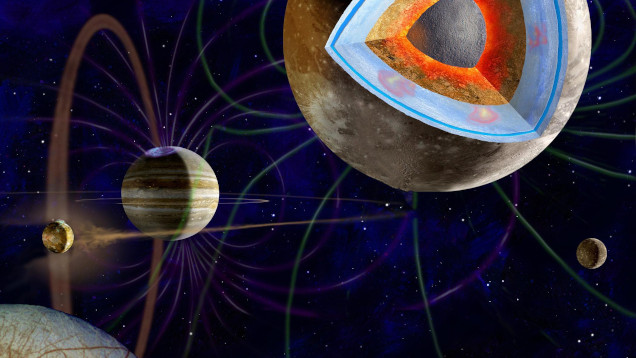
Sixty European engineering and science students will be selected to participate in a ten-day learning opportunity held in the village of Alpbach in the beautiful Austrian Alps. Participants will be engaged in an in-depth learning experience, attending stimulating lectures on relevant aspects of space science and engineering, and working intensely within four groups to define and design a space mission under the supervision of noted scientific and engineering experts.
The topic of the Summer School Alpbach 2025 is: “Small bodies in the solar system”
You will be exposed to real-life challenges, such as long working days (before proposal submission) and an expectation that you are able to immediately apply knowledge and techniques that you have only recently been exposed to. You will also have to handle the trials of establishing and maintaining an international and multi-disciplinary team composed of both scientists and engineers. You will need to balance the mission's scientific objectives and requirements with the realistic constraints of mission-design, spacecraft-design, technology and mission cost.
On the final day of the Summer School, each team presents their mission proposal to a jury of experts (and to all Summer School participants). Occasionally, some designs have actually gone on to represent a real space mission in ESA.
As expected learning outcomes and benefits for Summer School Alpbach participants:
- Will view space as an exciting and challenging enterprise
- Will be challenged to overcome the trials and reap the rewards of working in an international and multi-disciplinary team
- Will be exposed to a range of scientific and engineering topics relevant to designing space missions
- Will learn to balance scientific objectives and requirements with the realistic constraints of mission-design, spacecraft-design, and mission cost
- Will develop the ability to work together as a team towards the common goal of preparing presentations and reports under incredible time constraints
- Will forge long-term friendships that might eventually evolve into professional collaborations later in life
- Will enjoy the unique and enriching "Alpbach experience".
The Alpbach Summer School is complemented by the Post-Alpbach Summer School Event, which will take place in winter of 2025 (date tbd) in the ESA Academy's Training and Learning Facility at ESEC-Galaxia in Belgium.



 The Summer School Alpbach – A Research and Education Lab for Space Science and Technology